International Social Service
International Social Service was founded in 1924 by Mary E. Hurlbutt and Ruth Larned, two social workers, in response to the large-scale migration Europe had experienced since the late 19th century. After the First World War, the extremely difficult situation in Europe led tens of thousands of displaced people to settle in the United States. It was in this context that ISS was founded and its first branches were set up in key countries, providing information and assistance to migrants. The ISS network grew out of these first units, which developed a working methodology over the years. Cooperation between them gradually strengthened, becoming particularly robust and effective after the Second World War.
The founders of our network were looking for a practical response to the many problems that individuals and families faced with the laws and administrative procedures governing migration, and to the impact on their lives.
As the needs of migrants and people in distress grew, a Swiss committee called “Aid to Emigrants – Swiss Section of the International Migration Service” was set up, and in 1932 ISS Switzerland was born.
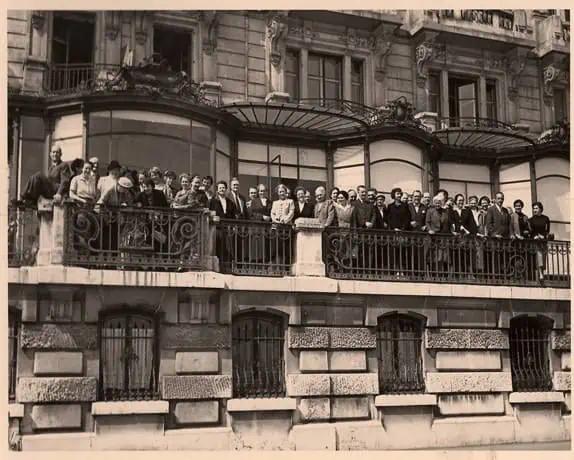
Mary E. Hurlbutt (1888–1980): a social work pioneer
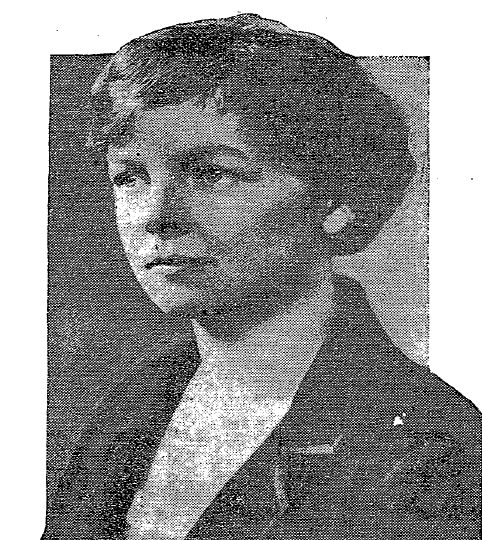
Mary E. Hurlbutt, born in 1888 in Greenwich, Connecticut, is recognised for her career as a social worker and immigrant rights activist. After completing her studies at the New York School of Social Work at Columbia University, Hurlbutt deepened her expertise through research projects in Vienna, London, Paris and Italy. She was actively involved with the Young Women’s Christian Association (YWCA), quickly rising to the posts of Immigration Secretary in 1919 and then Director of the Bureau of Immigration Service in 1922.
Grounded in her social work experience and enriched by her international experience, Hurlbutt developed a deep empathy for immigrants. Witnessing the global upheavals after the First World War, she anticipated the changing landscape and recognised that traditional immigration norms would become obsolete.
“Formerly, immigrants settled in a few large cities,” Hurlbutt explained. “Under the present law, they will tend to be more scattered, which increases the need for all schools of social work to include in their curricula an understanding of the technical and cultural problems.”
Recognising the need for a neutral body to help governments assist migrants, especially those forcibly displaced by war, Mary and her YWCA colleagues launched a ground-breaking study. Their central question was: “To what extent should human suffering be taken into account in the new migration laws?”
Backed by their in-depth research, these women created the first international organisation entirely dedicated to migration — the International Migration Service, later renamed International Social Service (ISS). Mary and her group of pioneering women laid the foundations for fair social work across borders, a mission that still guides ISS today.
Mary Hurlbutt later became a professor of social work at the New York School of Social Work, passing on her invaluable expertise. Her lasting legacy is marked by a commitment to humanitarian principles and a tireless pursuit of justice for migrants.
Ten milestones, a hundred years of commitment
The roots of ISS Switzerland go back to the Young Women’s Christian Association (YWCA), which began to take an interest in the fate of emigrant women and children at a time when many Europeans were leaving their countries in search of better prospects overseas.
Between the two world wars, a central body was set up in Geneva under the name International Migration Service (IMS), known today as the ISS General Secretariat.
With the economic crisis of 1929 and its social consequences, more and more cases concerning Switzerland were referred to the central body, which decided to open a Swiss Secretariat within it to handle them.
During this period of worldwide economic depression, many families returned to Switzerland as victims of unemployment or financial hardship.
As needs grew, a Swiss committee called “Aid to Emigrants – Swiss Section of the International Migration Service” was set up.
During and after the Second World War, the Swiss committee supported many refugee children by helping them find their families abroad or by finding placement solutions.
ISS began a collaboration of more than 40 years with UNHCR to support refugees in French-speaking Switzerland and Ticino. At that time, Switzerland, and Geneva in particular, attracted people fleeing their countries of origin in search of help and protection.
Thanks to its social and legal expertise, ISS Switzerland was able to clarify many transnational situations, while organising appropriate reception in Switzerland or return to another country.
ISS Switzerland opened a branch in Zurich and had correspondents in Bellinzona and St. Gallen to ensure nationwide coverage of its mission.
ISS Switzerland follows developments in private international law and works alongside the authorities to implement the Hague Conventions ratified by Switzerland, in particular the 1980 Convention on child abduction, the 1993 Convention on intercountry adoption and the 1996 Convention on the international protection of children.
Since the adoption of the UN Convention on the Rights of the Child in 1989, ISS Switzerland has worked to promote it so that the rights of children affected by migration are respected.
The Fondation Officielle de la Jeunesse (FOJ) mandates ISS Switzerland to assist every unaccompanied minor applying for asylum in Geneva.
ISS Switzerland begins working with local partners in the Balkans, Eastern Europe and West Africa to develop ways of strengthening protection systems for children who cannot grow up in their own families.
In response to the sudden rise in asylum applications in Europe in 2015, ISS Switzerland stepped up its commitment to support unaccompanied minors in exercising their rights and finding durable individual solutions. ISS Switzerland informs and raises awareness among the authorities concerned, experts and policymakers about the protection needs of unaccompanied minors through various projects and advocacy.
During this period, ISS Switzerland also developed expertise in supporting and protecting adult migrants when they leave Switzerland to return to their country of origin or to a country where they have legal status and can apply for asylum.
The pandemic brought new challenges for ISS Switzerland. Witnessing its impact on the front line, it reaffirmed its commitment to children, families and migrants in need of support.
Centenary of the ISS network. A hundred years after its founding in Geneva, the network celebrates a century of social work across borders. To mark the occasion, ISS Switzerland created the exhibition “Across Time and Borders”, which highlights the stories of women, children and families on migration routes and restores a human dimension to this complex subject.